
Contact Us Today
Helping Bees Thrive
Supporting pollinators, local agriculture, and our environment through responsible swarm relocation. At SaJe Family Farm, we believe honeybees are one of the most important parts of our ecosystem. Honeybees play a critical role in pollinating fruits, vegetables, flowers, and crops that help feed our communities. Without pollinators, farms, orchards, gardens, and wild plants would look very different.
Because of their importance, we are dedicated to helping save and relocate honeybee swarms whenever possible.
Why Honeybee Relocation Matters
Many honeybee swarms are unnecessarily destroyed due to fear or misunderstanding. By safely relocating swarms into managed hives, we can help:
What Is a Honeybee Swarm?
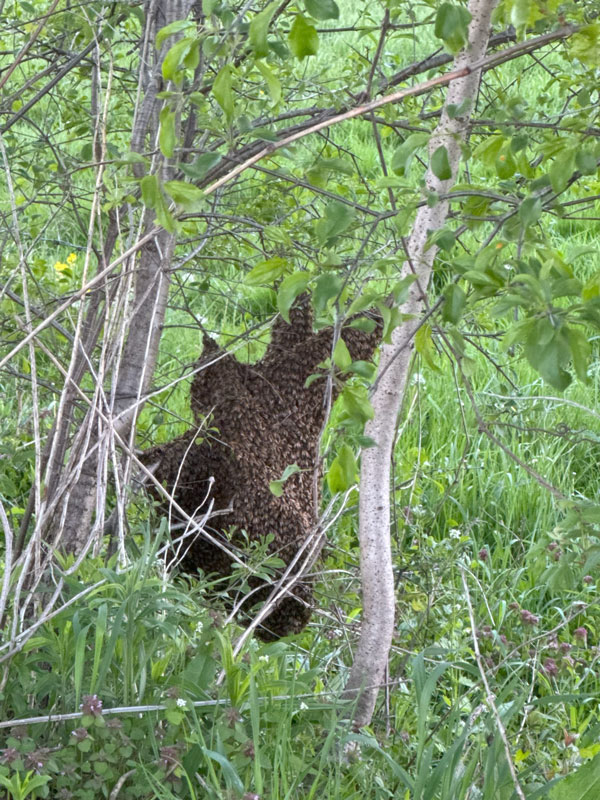
A swarm occurs when a healthy honeybee colony naturally divides and part of the hive leaves with a queen to establish a new home. During this process, thousands of bees may temporarily cluster together on a:
While seeing a large group of bees can be alarming, swarming honeybees are typically very docile. Because they do not yet have a hive, brood, or honey stores to defend, they are often much calmer than people expect.
How We Can Help
At SaJe Family Farm, we may be able to assist with visible and accessible honeybee swarms, including:
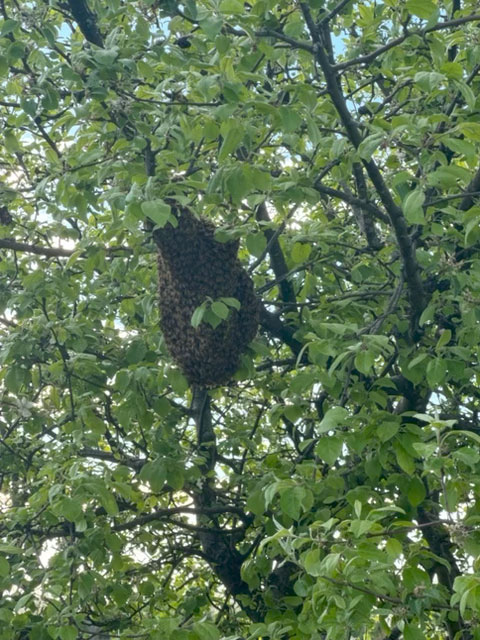
Photos are extremely helpful when contacting us. They allow us to better determine whether you are seeing a swarm or an established hive inside a structure.
What We Do Not Offer at This Time
At this time, we do not offer cut out services. A cut out involves removing bees that have already established a colony inside a structure, such as house walls, roofs, soffits, chimneys, floors, sheds, barns, or other enclosed spaces. These removals often require opening walls, ceilings, or other parts of the structure in order to fully remove the bees, comb, brood, and honey. Because of the complexity involved, cut outs can be very labor-intensive and may also require construction repairs afterward. While we are not currently performing cut outs, we are still happy to help identify whether you are dealing with a temporary swarm or an established colony, offer guidance on possible next steps, and recommend local beekeepers or resources whenever possible.
Need Help With a Swarm?
If you think you have a honeybee swarm on your property, please contact us as soon as possible. Swarms are often temporary and may move on quickly, so timing is important. When reaching out, please include: Your location, a photo of the bees, where the bees are clustered and how long they have been there. We are always happy to help when we can and appreciate every opportunity to protect and preserve these incredible pollinators.